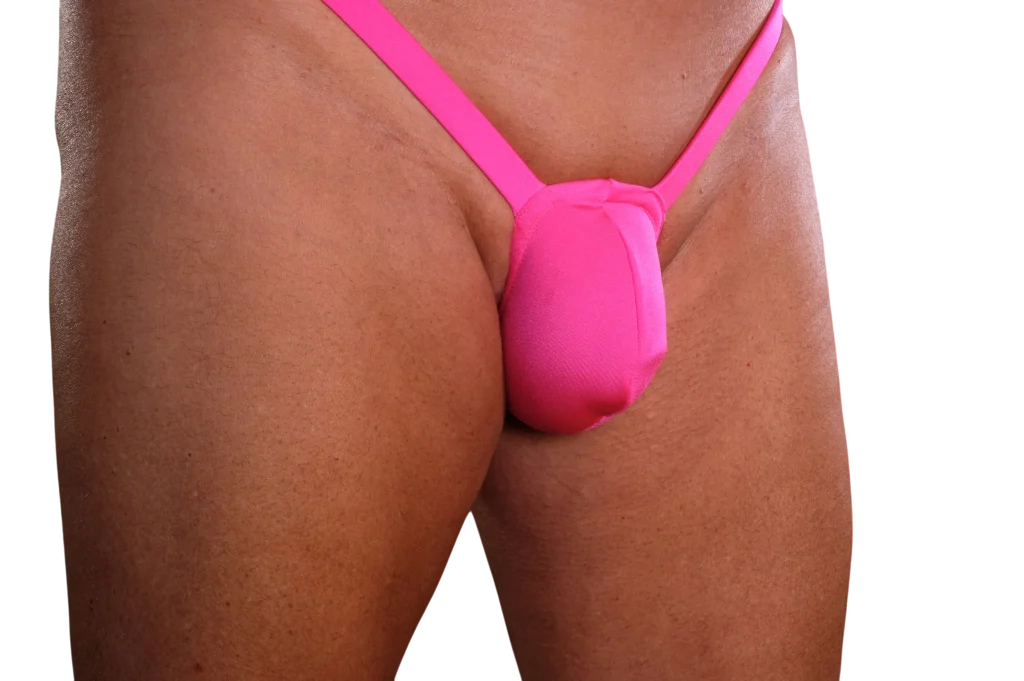
Spandex G-strings have undergone one of fashion’s most interesting crossovers—moving from being seen primarily as women’s lingerie or niche performancewear into a growing category of men’s underwear and swimwear. While modern culture often framed G-strings as feminine in the late 20th century, thong-style garments actually began as some of humanity’s earliest forms of clothing and were originally worn by men in many cultures for practicality, support, and minimal coverage. Over time, fashion, body confidence, material innovation, and global beach culture helped bring the style full circle.
From Ancient Male Garment to Modern Fashion Reinvention
Long before the term “G-string” existed, thong-like garments were used by men across Africa, Asia, and other warm climates as functional clothing. These early designs prioritized freedom of movement, support, and heat management. In many ways, the modern men’s spandex G-string is less a radical invention and more a reinvention of one of the oldest male garment concepts—updated with synthetic fabrics, modern tailoring, and contemporary aesthetics.
The shift toward modern thong and G-string swimwear accelerated in the 1970s, when designer Rudi Gernreich popularized thong swimwear in response to changing social norms and beachwear regulations. Brazilian beach culture also played a huge role, especially through the rise of the tanga and sungas, which normalized smaller, body-conscious cuts for both men and women. Brazil, parts of Europe, and Australia helped establish minimal swimwear for men as fashionable rather than taboo.
Why Spandex Changed Everything
The crossover from niche to mainstream would not have happened without spandex (elastane/Lycra). Spandex transformed minimal garments by making them:
- Stretchier and more adaptive to body shape
- More supportive despite tiny cuts
- Quick-drying for swimwear
- Durable enough for repeated beach, pool, or underwear use
- Comfortable enough for everyday wear
Traditional fabrics often made tiny garments impractical, but spandex allowed designers to create sleek, body-hugging G-strings that could function as both swimwear and underwear. The second-skin feel of spandex also made these garments more appealing to men seeking comfort without bulk.
The Influence of Global Swimwear Culture
Worldwide, men’s swimwear norms vary dramatically. In many parts of Europe, South America, and Australia, smaller men’s swimwear has long been more accepted than in the United States. Brazilian beaches especially helped normalize ultra-minimal men’s cuts, including thong backs and G-string styles, by emphasizing tanning, physique display, and confidence.
As international travel, social media, and global fashion trends expanded, these once-regional styles spread. Men increasingly saw body-revealing swimwear not solely as sexualized, but as:
- Practical for reducing tan lines
- More comfortable in heat
- A way to showcase fitness
- A form of fashion individuality
- A challenge to outdated gender norms
This cultural exchange has been especially powerful online, where men now see influencers, athletes, and everyday beachgoers wearing styles that would once have been considered highly unconventional.
Breaking the “Women’s Wear” Label
One of the biggest reasons for the crossover is the broader cultural shift around masculinity and fashion. Over the past two decades, men’s fashion has become more experimental, body-conscious, and expressive. Skinny jeans, leggings, crop tops, jewelry, and gender-fluid aesthetics all contributed to reducing the stigma around garments once labeled “feminine.”
For many men, spandex G-strings are not about femininity at all—they are about:
Minimalism: Less fabric, less restriction
Performance: Better tanning, athletic freedom, reduced bunching
Confidence: Highlighting physique
Comfort: Eliminating excess fabric
Erotic or aesthetic expression: Feeling bold, sexy, or unconventional
This mirrors how Speedos and men’s bikini briefs also moved from being controversial in some markets to widely accepted in others.
Men’s Underwear Evolution
The underwear market has played a major role too. Men’s thongs and G-strings were once largely confined to specialty retailers, bodybuilding posing wear, or exotic dancewear. Today, many mainstream and boutique brands offer male-specific cuts with engineered pouches, ergonomic support, and styles designed for comfort rather than novelty. Major retailers now recognize demand for men’s thong products, reflecting broader acceptance.
This evolution created several categories:
Everyday Comfort G-Strings
Designed for minimal visibility under clothing and freedom of movement.
Athletic / Performance G-Strings
Popular for dance, bodybuilding, or reducing lines under fitted clothing.
Swim G-Strings
Focused on tanning, beach aesthetics, and statement style.
Fashion / Gender-Fluid Designs
Exploring softer, more androgynous, or crossover-inspired silhouettes.
Social Media and Body Positivity
Instagram, TikTok, fitness culture, and beach influencers have significantly accelerated normalization. Visual culture rewards body confidence and personal style, and smaller swimwear often photographs dramatically. This has helped men’s G-strings evolve from taboo to aspirational in some circles.
At the same time, body positivity movements have encouraged men to experiment with fashion without defaulting to traditional modesty expectations. The result: many men are choosing G-strings not because they are trying to imitate women’s fashion, but because they are reclaiming minimalism for themselves.
Remaining Cultural Differences
Despite growth, acceptance is not universal. In some countries or regions, men’s G-strings are still viewed as provocative or unconventional, especially in conservative beach settings. Public norms, local laws, and cultural attitudes continue to shape where these garments are embraced.
However, globally, the trend is clear: men’s swimwear is diversifying, and G-strings are increasingly part of that spectrum.
The Future of Men’s Spandex G-Strings
As fashion becomes more individualized and less bound by rigid gender expectations, men’s G-strings are likely to continue expanding. The category now intersects with:
- Luxury swimwear
- Performance apparel
- Gender-fluid fashion
- Resort wear
- Festival culture
- Specialty underwear
What was once considered a strictly women’s garment is now better understood as part of a broader continuum of minimal fashion.
Final Thoughts
The rise of spandex G-strings in men’s fashion is not simply about sexuality or shock value—it reflects a larger shift in comfort, fabric technology, body confidence, and global fashion exchange. In many ways, men wearing G-strings is less about crossing into women’s fashion and more about reclaiming one of humanity’s oldest clothing concepts in a modern, high-performance form.
From Brazilian beaches to European resorts to niche American swimwear markets, the spandex G-string has become a symbol of changing ideas about masculinity, self-expression, and what men can wear when fashion is driven less by old rules and more by personal choice.